The 10 Best Fundraising Platforms for Startups in the USA (2026)
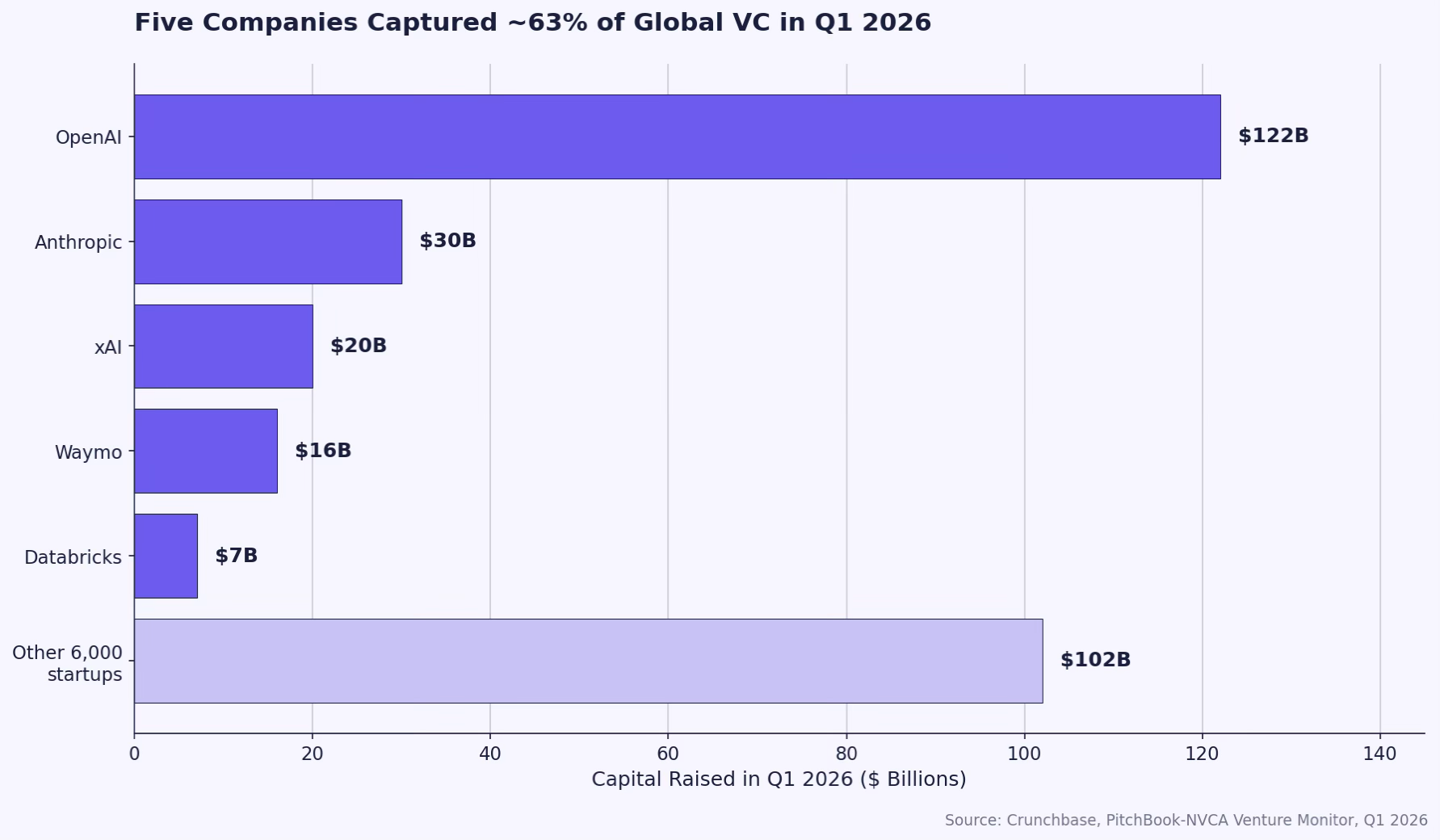
Q1 2026 set every funding record on the books. $297 billion was deployed globally, a 150% jump year over year. Four AI deals captured $188 billion of that, roughly 63% of the quarter. Strip those out and the remaining 6,000 startups split about $109 billion.
That gap is the story of fundraising in 2026. Capital exists. Access to it does not.
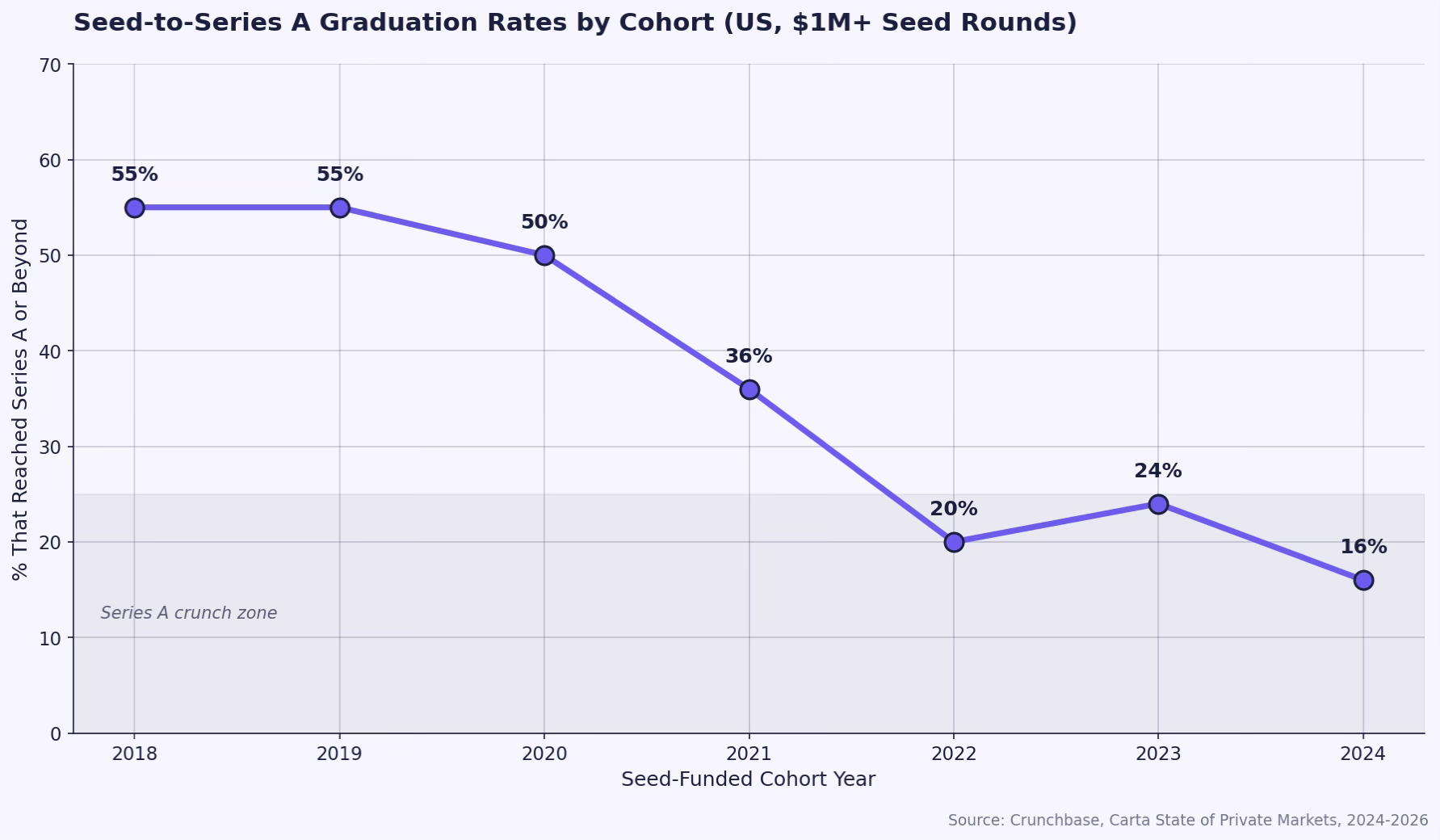
Crunchbase data shows just 16% of 2024-cohort startups that raised a $1M+ seed have graduated to Series A. Compare that to 55% or more for pre-2020 cohorts. The path from one round to the next has compressed in dollars and stretched in time. According to Carta data on 3,365 US startups, 39% of companies now take three or more years between seed and Series A, double the rate from 2019.
That's why fundraising platforms matter more than ever. They're the rails founders use to reach capital that no longer flows freely. Not every platform serves the same need. Some run institutional rounds. Some crowdsource from retail. Some specialize in syndicates, secondaries, or warm introductions. Picking the wrong one wastes 90 days you can't get back.
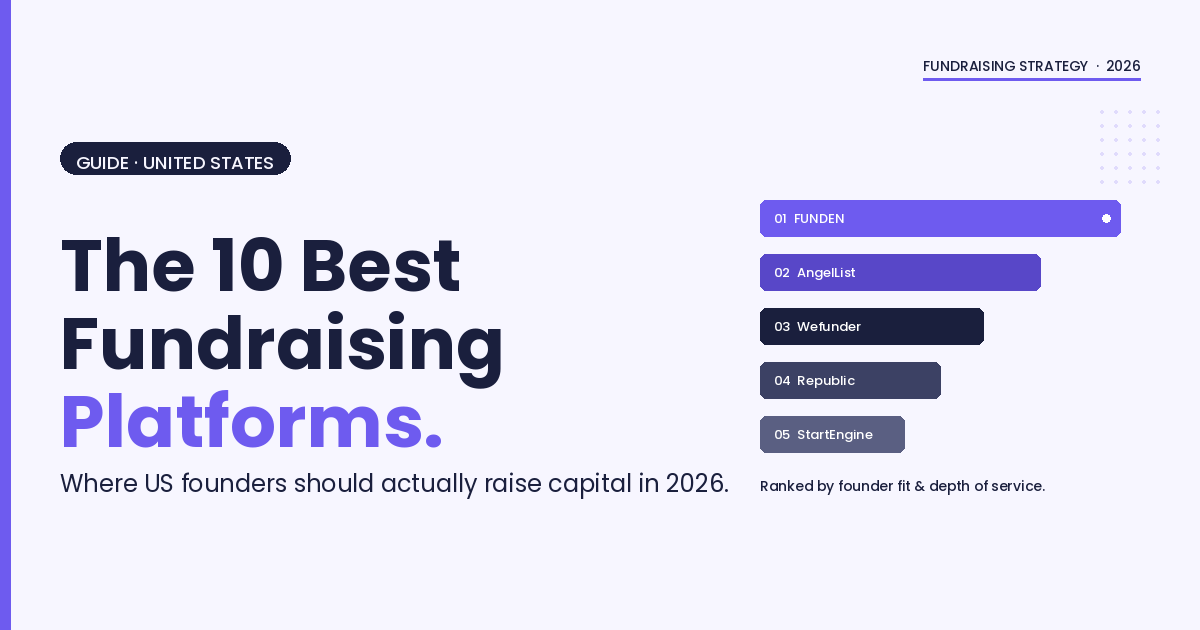
Below, the ten fundraising platforms US founders should evaluate in 2026, ranked by depth of service, founder fit, and track record.
How fundraising platforms divide in 2026
Fundraising platforms in the US split into five rough categories:
- Capital advisory and investor matching (high-touch, institutional)
- Equity crowdfunding (Regulation CF, Regulation A+, Regulation D)
- Angel syndicates and rolling funds
- Secondary marketplaces (pre-IPO liquidity)
- Hybrid and vertical-specific platforms
Founders typically use one or two categories per round. Series A founders pulling from institutional VCs lean on advisory and syndicates. Pre-seed founders without strong investor networks may run a Reg CF campaign alongside angel outreach. A late-seed company might use a secondary marketplace to give early employees liquidity while the formal round closes.
1. Funden: Best for institutional capital advisory (Pre-Seed to Series B)
Funden is a capital advisory firm built around a single observation. Most founders fail their raise because the deal isn't ready, not because the intros are missing.
The firm runs an Assisted Fundraising program for founders raising $1M to $15M+ across Pre-Seed through Series B. Engagement starts with a 30-minute call to pressure-test the narrative, structure, and readiness of the deal. If accepted, founders go through deal benchmarking, narrative stress-testing with real investors, and institutionalization of the deal before warm introductions to a network of 800+ partner VCs, family offices, and angel networks.
Track record (as of 2026):
- 1,300+ founders supported through the capital readiness process
- $180M+ in capital raised by Funden-supported companies
- 500+ institutional investors engaged per deal
- 2,000+ warm introductions made
- Backed by FE International, the firm behind $50B+ in M&A transactions across 2,000+ deals globally
Stages served:
Pre-Seed, Seed, Series A, Series B
Offices: San Francisco, New York, London
Cost model: Monthly retainer. No success fees, no equity taken from the round.
Best fit: Founders who want a real diagnosis before going to market. Companies that have the fundamentals but need help institutionalizing the deal, refining the narrative, and getting in front of investors aligned to their stage and thesis.
The differentiator: most platforms are self-serve. Funden runs a process. Founders work with the team to surface what's actually broken in the deal before investors see it, which is the difference between closing in 90 days and burning six months on rejections.
Apply at funden.com or book a call with the Funden team.
2. AngelList: Best for syndicates and rolling funds
AngelList pioneered online syndicates in 2013 and remains the default platform for tech founders raising from angels and emerging VC fund managers.
The platform supports $171B+ in assets, 72,000+ active investors, and $10.7B+ raised by active startups, including more than 100 unicorns. Rolling Funds, launched in 2020, let GPs deploy capital from LPs who commit quarterly, expanding the platform to more than 10,000 active fund managers.
- Best for: Founders raising $250K to $5M who have warm intros to syndicate leads or are already in a hot deal that will fill quickly.
- Fees: Roughly 20% carry on syndicate profits, varies by fund manager.
- Trade-off: Syndicates work best when there's a clear lead investor setting terms. Used as a primary fundraising channel without an anchor, syndicates often stall.
3. Wefunder: Equity crowdfunding leader by volume
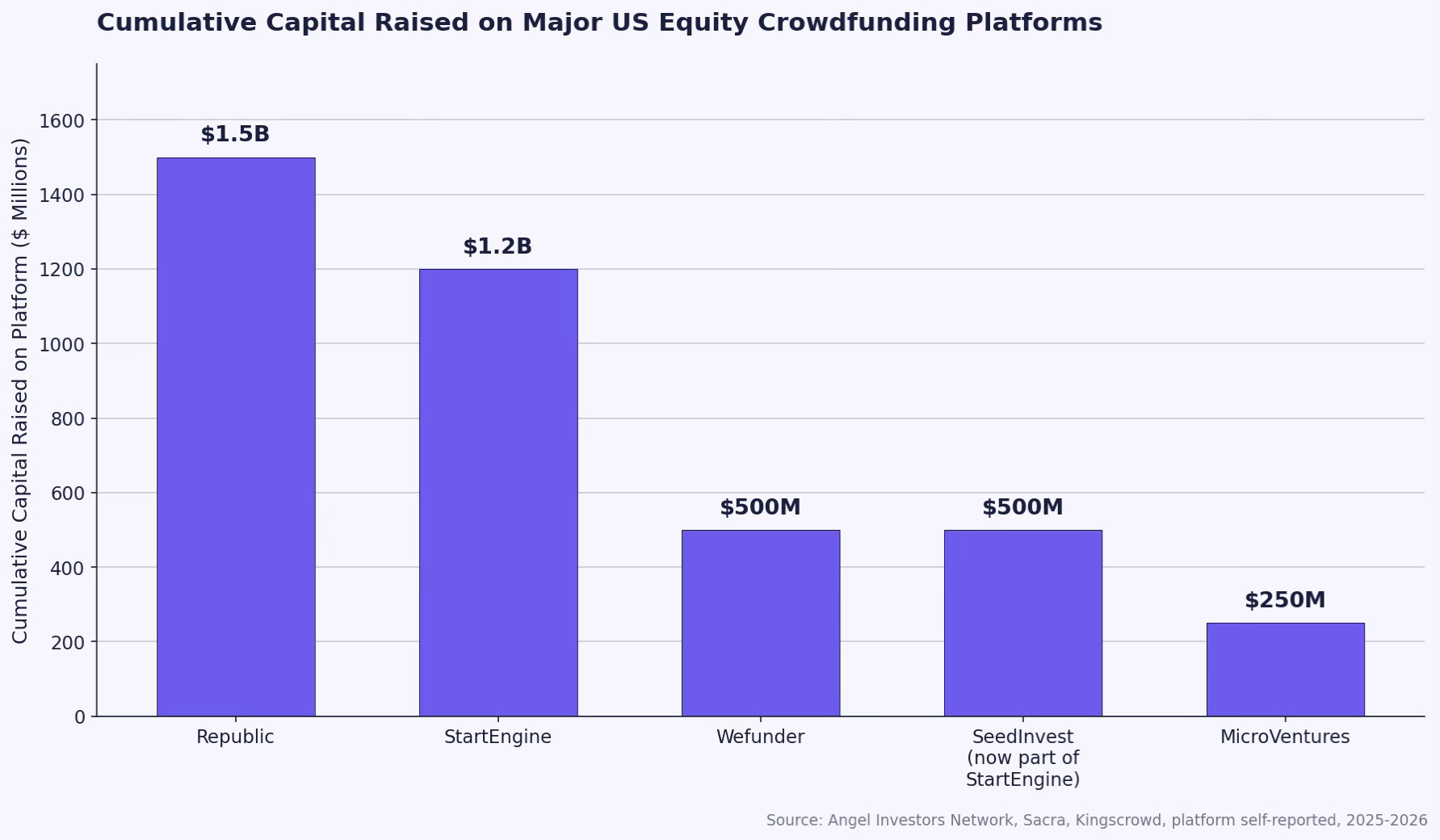
Wefunder dominates Regulation CF deal volume in the US, holding roughly 33% of total Reg CF dollars raised. Over its life, the platform has facilitated more than $500M across 2M+ registered investors.
- Best for: Consumer brands, breweries, restaurants, mission-driven companies, and B2B startups with existing customer communities.
- Fees: 7.5% platform fee on the first $500K raised, 5% thereafter. 2% equity in most deals.
- What it does well: Community-driven model where investors vote on featured campaigns. Strong fit for companies that can mobilize an existing email list.
The Reg CF cap raised from $1.07M to $5M in 2021, which materially changed what's possible on the platform. A well-run Wefunder campaign can now close a full seed round.
4. Republic: Equity crowdfunding plus secondary market
Republic has facilitated $1.5B+ raised across startups, real estate, and crypto since launch. The platform serves 3M+ registered investors and has expanded into Mirror Tokens (digital instruments tracking private company values) and a venture fund that co-invests in top-performing platform campaigns.
- Best for: Tech and consumer startups looking for accredited investor exposure alongside retail capital. Roughly 50% to 60% of Republic's investor base is accredited, the highest mix among major Reg CF platforms.
- Fees: 6% cash plus 2% equity on capital raised.
- Strategic angle: If a Republic raise performs well, the firm's institutional arm may lead the follow-on Series A. That feedback loop doesn't exist on other crowdfunding platforms.
Republic Capital reported two IPOs from its portfolio in 2025 with three more queued for 2026.
5. StartEngine: Largest Reg A+ volume
StartEngine has raised $1.2B+ across 1,000+ campaigns since 2014, with 1.8M+ registered investors. Kevin O'Leary's involvement as Chief Strategy Advisor brings media access (Shark Tank features, CNBC interviews) that other platforms can't match.
- Best for: Hardware, deep tech, and consumer hardware startups. Higher-volume campaigns ($1M to $5M Reg CF or $5M to $75M Reg A+).
- Fees: 6% to 8% of capital raised. 2% equity component negotiable.
- Success rate: Reg CF campaigns on StartEngine close at 90.8%, the highest in the category.
6. MicroVentures: Curated equity crowdfunding for accredited investors
MicroVentures runs a tighter selection process than the major Reg CF platforms. Less than 5% of applicants get listed, which compresses founder timelines but improves campaign quality on the platform.
- Best for: Series A-ready companies with strong fundamentals that want an accredited-investor-only marketplace. Companies in internet software, media, green tech, mobile, and gaming.
- Track record: Early backer of Airbnb and Slack, among others.
- Fees: All-or-nothing structure. If the campaign misses the target, the company keeps nothing.
7. DealMaker: Best for white-label fundraising infrastructure
DealMaker isn't a marketplace. It's the back-end infrastructure that processes investments for issuers who run their own raise pages. Wefunder now considers DealMaker its primary competitor in Reg CF, replacing Republic in that position.
- Best for: Companies that have an audience and want to capture investors directly through their own website, not a third-party marketplace.
- Fees: Software plus processing fees. No platform take of equity.
- Use case: Brands with significant direct-to-consumer reach or B2B companies running structured Reg D 506(c) raises.
8. Fundable: Hybrid rewards and equity for early-stage products
Fundable, owned by Startups.com, offers a hybrid model combining equity crowdfunding with rewards-based campaigns. The platform is built for software, hardware, and consumer product companies that want to layer product pre-orders on top of equity capital.
- Best for: Pre-seed and seed-stage product companies that can monetize through customer pre-sales while also raising equity.
- Fees: Subscription-based. Money and shares change hands outside the platform.
- Trade-off: Fundable is more of a profile-and-pitch service than a closed marketplace. Founders contact investment targets directly.
9. Hiive: Secondary marketplace for private stock
Hiive isn't a primary fundraising platform. It's a marketplace for buying and selling shares in VC-backed companies before IPO. For founders, the value is offering early employees and angels a liquidity path before the formal exit.
- Best for: Late-seed to Series B companies whose early employees and angels want partial liquidity. Companies looking to bring in new investors via secondary sales.
- Investor base: Accredited investors and family offices buying private shares directly.
- Why it matters in 2026: With time-to-IPO stretching for most VC-backed companies, secondary liquidity has become a retention tool. Hiive, Forge Global, and EquityZen are the three platforms most US founders will interact with for this purpose.
10. OurCrowd: Global accredited investor platform
OurCrowd is an Israeli-founded platform with US operations, serving accredited investors only. The platform has facilitated billions in funding across a global portfolio of 400+ companies since 2013.
- Best for: Startups looking for international accredited capital, particularly in deep tech, defense, healthcare, and AI.
- Fees: Mix of management fees and carry, structured like a fund.
- Difference: OurCrowd uses an SPV model. Each deal forms its own investment vehicle, so founders deal with one entity on their cap table, not hundreds of individual checks.
How to pick the right platform for your stage
Match the platform to the stage and the audience you have.
Pre-Seed ($250K to $1M):
AngelList syndicates or a Reg CF raise on Wefunder if you have an audience. Skip institutional advisory until you've validated product-market fit.
Seed ($1M to $5M):
Funden if you want institutional VCs. AngelList for syndicate-led rounds. Wefunder or StartEngine if you have a consumer brand or product audience.
Series A ($5M to $15M):
Funden for institutional fundraising. Republic or MicroVentures only if you want a strategic retail layer alongside the institutional round.
Series B+ ($15M to $50M):
Funden for advisory and warm intros to institutional capital. Hiive for secondary liquidity for early employees. Skip Reg CF entirely at this stage.
The platform you choose tells investors something about how you think about the raise. Reg CF works for some companies and signals weakness for others. Institutional advisory works when you have the fundamentals to back it up. The choice matters more than founders typically assume.
The deal makes the platform work, not the other way around
The fundraising platform you choose matters less than whether your deal is actually ready for the platform you choose. Most founders spend six to twelve months on outreach before realizing what was broken in the deal. By then, the calendar, the cap table, and the runway have all worked against them.
Funden exists to compress that timeline. The team has supported 1,300+ founders, engages 500+ institutional investors per deal, and has helped portfolio companies raise $180M+ to date. Backed by FE International, the firm runs a structured process: deal benchmarking, narrative stress-testing with real investors, institutionalization, and warm introductions to a network of 800+ partner VCs.
If you're raising between $1M and $15M+ and want a real diagnosis before going to market, book a 30-minute call with the Funden team. The best outcome of that call is clarity, whether or not we end up working together.